

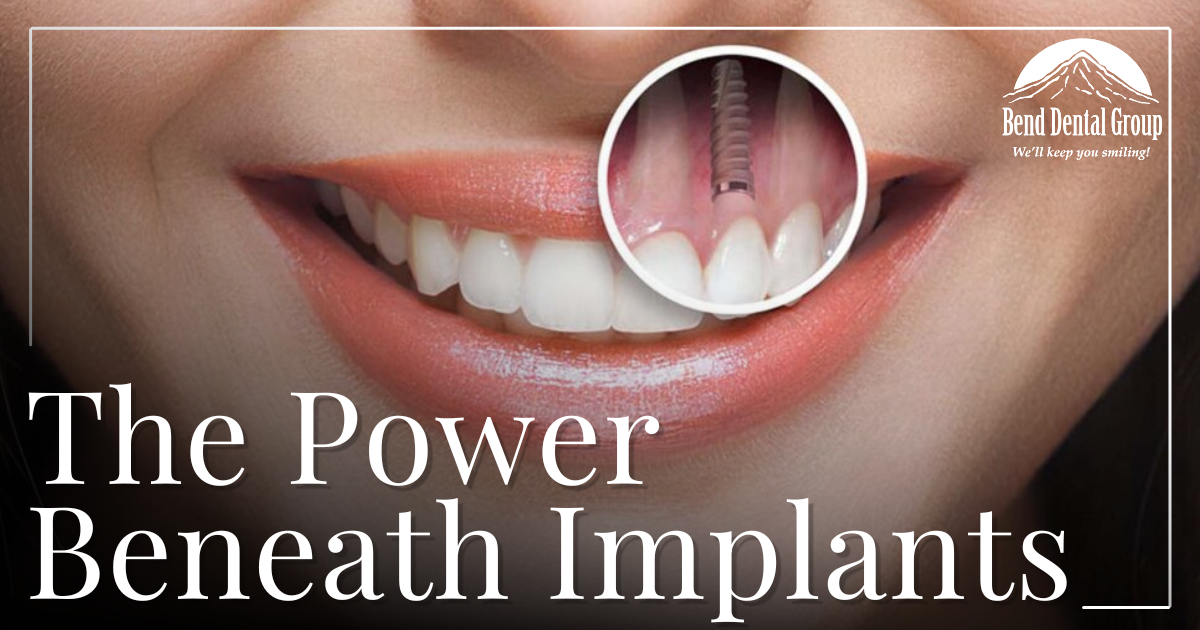
Dental Implants: Less About the Tooth & More About the Root
Most people think of dental implants as replacements for missing teeth. That makes sense, because what you see is the crown, which looks and feels like a natural tooth. What often gets missed is the most important part of the implant, the part you never see. Dental implants are about replacing the root, and that detail changes how they function, feel, and protect your oral health.
Why Missing a Tooth Is More Than a Cosmetic Problem
When a tooth is lost, the visible gap is only part of the story. Beneath the surface, the jawbone that once supported the tooth no longer receives stimulation from chewing. Over time, this lack of stimulation leads to bone loss, resulting in changes to bite stability, facial structure, and even the position of surrounding teeth.
This is why leaving a missing tooth untreated can affect more than just appearance. Neighboring teeth may drift, chewing can become uneven, and the jawbone itself can weaken. Dental implants address this deeper issue by restoring what was lost below the gumline, not just what shows when you smile.
What Makes Dental Implants Different From Other Options
Unlike bridges or removable appliances, dental implants are anchored directly into the jawbone. The implant post acts as an artificial root, integrating with the bone through a natural healing process. This integration creates stability that closely mimics a natural tooth. Because implants replace the root, they help preserve jawbone density. This support keeps the bite more balanced and helps maintain facial structure over time. That foundational role is what sets implants apart from treatments that only sit on top of the gums.
The “Quiet Strength” of Dental Implants
The interesting twist with dental implants is that their biggest benefit is invisible. Once healed, implants do not announce themselves. They do not rely on neighboring teeth for support, and they do not shift during chewing or speaking. They simply function. Patients often report that implants feel more like their own teeth than any other replacement option. This sense of normalcy comes from the stability created at the root level. The result is confidence without constant awareness of dental work.
What Dental Implants Can Restore
Dental implants are versatile and can replace a single tooth, multiple teeth, or even support full-arch restorations. In each case, the goal remains the same: restore function and support at the foundation. Implants restore:
- Strong, efficient chewing
- Bite balance and stability
- Jawbone support
- Natural-looking smile aesthetics
By addressing function and appearance, implants support long-term oral health rather than offering a short-term fix.
What Dental Implants Can’t Do Alone
While dental implants are powerful, they are not automatic solutions for every situation. Adequate bone support is necessary, and overall oral health must be stable before placement. Gum disease, uncontrolled grinding, or certain medical conditions may need to be addressed first. This is why implant planning is thorough. Dentists evaluate bone levels, bite forces, and healing capacity to ensure implants are placed into an environment that supports long-term success.
The Planning Behind Natural Results
Successful dental implants rely on careful planning rather than speed. Dentists consider how the implant will integrate with the bone, how the crown will meet opposing teeth, and how the final result will blend into the smile. This planning ensures implants feel comfortable and look natural. When done thoughtfully, implants support everyday activities like eating and speaking without drawing attention to themselves.
Seeing Implants as a Foundation, Not Just a Fix
Dental implants work best when viewed as a structural solution, not just a cosmetic one. By replacing the root, they support bone health, bite stability, and long-term comfort. This deeper role is what makes implants such a valuable option for tooth replacement. When patients understand that implants rebuild what was lost beneath the surface, the decision feels less about replacing a tooth and more about restoring balance to the entire mouth.
Ready to get your implants? Give us a call and schedule an appointment at Bend Dental Group, located in Bend, OR.