
What Is Myofunctional Therapy and How Can It Help?
Breathing, swallowing, speaking, and even the resting position of your tongue may seem like simple things your body handles automatically. The muscles involved in those everyday functions can have a bigger impact on oral health than many people realize.
At Bend Dental Group, myofunctional therapy is one way we look beyond the teeth and consider how the muscles of the tongue, throat, and face are working together. The goal is to strengthen and retrain those muscles so they can support healthier function over time.
Why Muscle Function Matters
Your mouth is not just a collection of teeth. The tongue, lips, cheeks, and throat all play a role in how you breathe, swallow, speak, and rest. When those muscles are not working as efficiently as they could, the effects may show up in different ways.
Some people may struggle with certain speech or swallowing patterns. Others may have concerns related to snoring, sleep apnea, or airway function. In children, muscle patterns may also influence the way the teeth and jaws develop. That is why myofunctional therapy focuses on function rather than simply treating one isolated symptom.
What Does Myofunctional Therapy Involve?
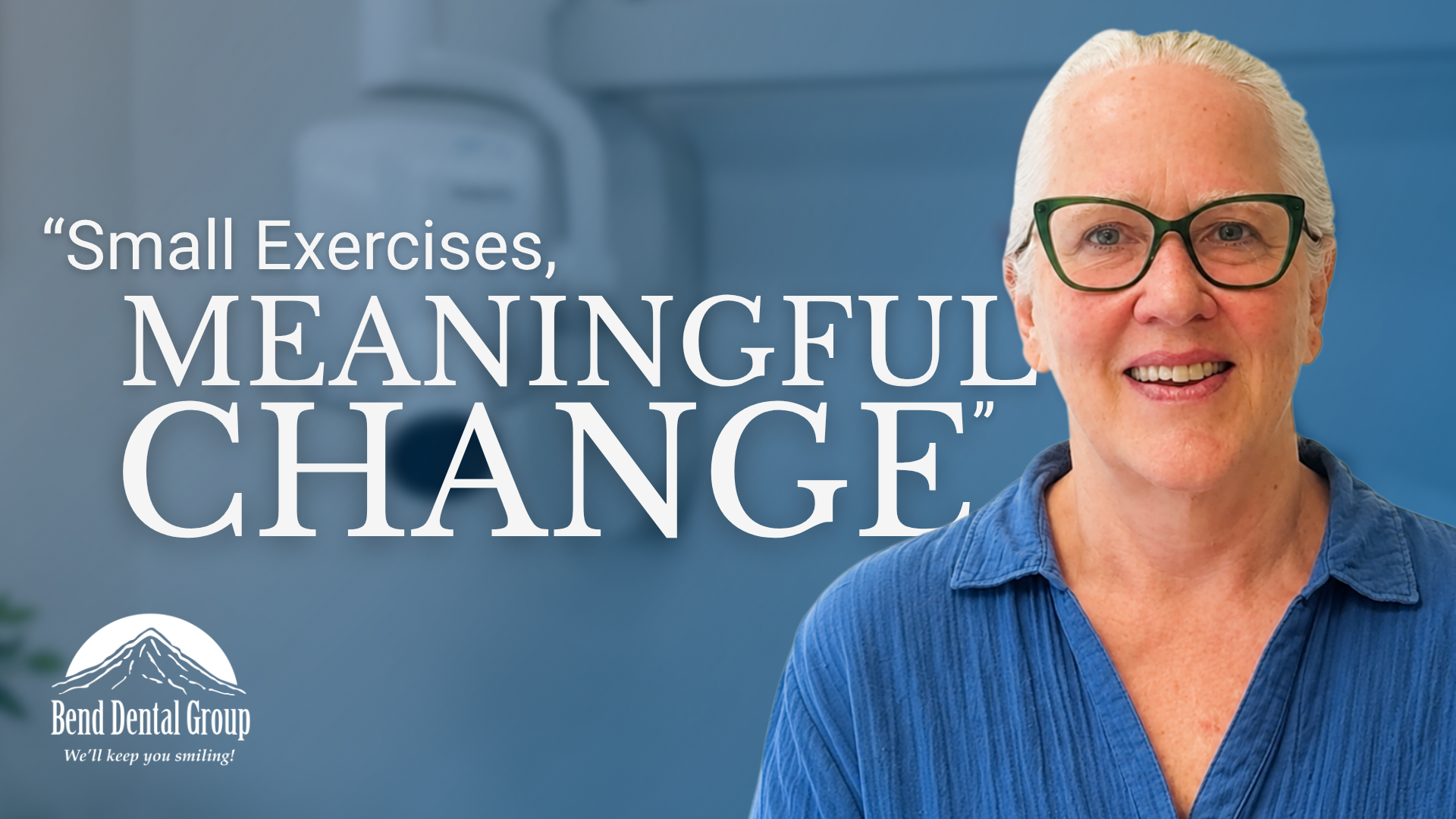
Myofunctional therapy uses a series of exercises designed around the individual patient. A certified therapist guides you through exercises that strengthen and retrain the tongue, throat, and facial muscles. These exercises are then practiced regularly at home so the new patterns can become more natural over time.
The process is gradual. There is no appliance doing all the work for you and no single exercise that solves everything at once. Instead, the goal is to help the muscles learn healthier patterns through repetition and consistency.
How Can It Support Better Breathing?
One of the most important reasons myofunctional therapy may be recommended is its connection to airway function. At Bend Dental Group, myofunctional therapy is part of our sleep dentistry services and helps strengthen the tongue, throat, and facial muscles to improve airway function naturally. For some patients with snoring or sleep apnea concerns, it may be one part of a broader treatment plan.
That larger picture matters. Sleep dentistry can also include oral appliance therapy, Vivos Therapy, or other approaches, depending on what the individual patient needs and the nature of the sleep-related concern.
Who May Benefit?
Myofunctional therapy is not limited to one age group. It might be helpful for children with developing teeth and jaws, adults with sleep apnea or snoring concerns, and patients who have difficulty with speech or swallowing. That range reflects how many different functions depend on the same group of oral and facial muscles. The reasons for treatment may be different, but the basic idea is the same: help the muscles work in a way that better supports breathing, swallowing, speech, and oral health.
What Does Progress Look Like?
Because myofunctional therapy is based on muscle retraining, progress usually comes from steady practice rather than an immediate change. Over time, the exercises may help support improved airway function, better dental alignment, and healthier oral function.
The exact goals will depend on why therapy was recommended in the first place. For one person, the focus may be breathing or snoring. For another, it may be swallowing or speech. For a child, it may be supporting healthy growth and development.
A More Complete View of Oral Health
Myofunctional therapy fits naturally with the way we approach care at Bend Dental Group. Our philosophy is to look at the full picture, including your airway, sleep, bite, and lifestyle, rather than focusing only on individual teeth.
Sometimes improving oral health means treating decay or repairing a damaged tooth. Other times, it means looking at how the muscles around the mouth are functioning every day.
If you have concerns about snoring, sleep apnea, swallowing, speech, or oral muscle function, schedule an appointment with our office located in Bend, OR. We can talk about what you have been noticing and help determine whether myofunctional therapy may be a useful part of your care.